For me, travel has always been about escape and the further away, the better. I like that feeling of landing into a completely different culture, where everything from the food to the pace of life feels slightly unfamiliar.
It started in my early twenties when I went backpacking in Thailand, not entirely sure where I was going and completely unprepared for the culture shock that followed. It took me a while to settle into it, but once I did, I was hooked. That trip led me to Australia soon after, where I stayed for nine years, convinced it didn’t get much better than that.
And then I discovered the Caribbean.
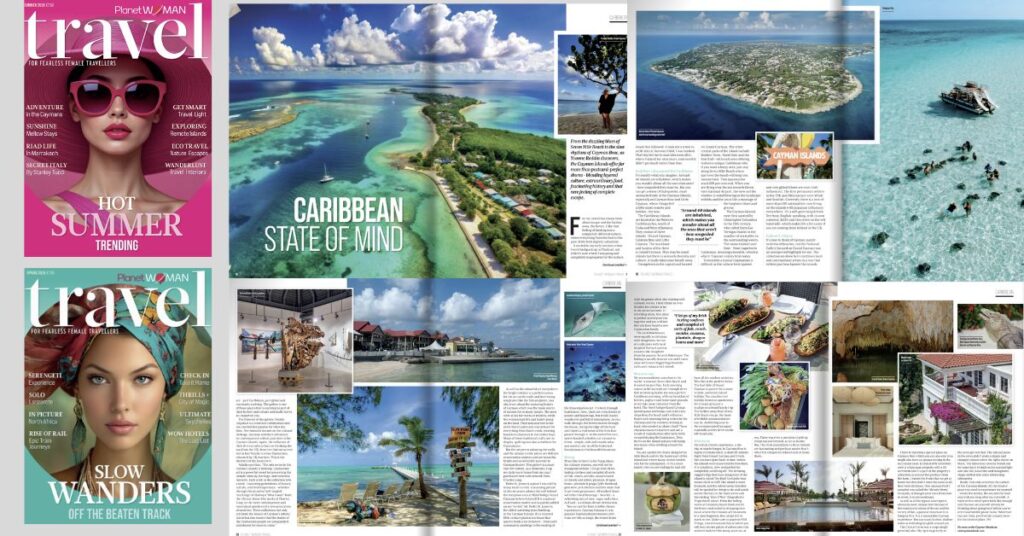
It’s exactly what you imagine. Around 40 islands are inhabited, which makes you wonder about all the ones that aren’t – how unspoiled they must be. But you can get a sense of that quieter, more untouched side on the Cayman Islands, especially on Cayman Brac and Little Cayman, where things feel a little more remote and hidden – for now.
The Caribbean Islands are located in the Western Caribbean Sea, south of Cuba and West of Jamaica. They consist of three islands – Grand Cayman, Cayman Brac and Little Cayman. The mainland and busiest of the three is Grand Cayman. They may be small islands but there is so much diversity and culture, it really takes your breath away.
Georgetown is the capital of Grand Cayman. The other central parts of the island include Bodden Town, North Side and the East End – with each area offering visitors a unique Caribbean vibe. If you want a buzzy area, just stay along Seven Mile Beach, where even the beach will keep you mesmerised. That aquamarine sea is 100 per cent real. When you are flying over the sea towards Owen International Airport, the view out the window is mind-blowing as the landscape unfolds, and the sea is like a montage of the brightest blues and greens.
The Cayman Islands were first spotted by Christopher Columbus in the 15th century, who called them Las Tortugas thanks to the number of sea turtles in the surrounding waters. The name evolved over time from Lagartos to Caymanas, meaning crocodile, which is where ‘Cayman’ comes from today.
To describe a typical Caymanian is difficult as the culture feels layered and very global (there are even Irish influences). The first permanent settlers in the 17th and 18th centuries were Welsh and Scottish. Currently, there is a mix of more than 100 nationalities now living on the islands with Jamaican influences everywhere. It’s a self-governing British Territory, English-speaking, with its own currency (KYD) and they drive on the left-hand side, which makes life a bit easier if you are coming from Ireland.
Culture & History
It’s easy to think of Cayman purely in terms of beaches, but the National Gallery, located on Grand Cayman, was an unexpected highlight for me. The collection on show here combines local and international artists in a way that reflects just how layered the islands are – part Caribbean, part global and constantly evolving. The gallery is one of those places that is an integral part of their history and culture and really leaves an impact on you.
The Director of the gallery, Natalie Urquhart, is a wealth of information and you can feel her passion for what she does. Her research focuses on the cultural heritage, memory and their influences on contemporary artistic practices in the Cayman Islands. Again, the influence of their diverse culture had me thinking she was from the UK, from her distinct accent, but in fact Natalie is a true Caymanian, educated by UK teachers. This is the diversity of the locals here.
Natalie says, “The arts sector in the Cayman Islands is thriving. Caymanian art is a powerful vessel for preserving the islands’ identity, heritage, and collective memory. Each work in the collection tells a story – capturing generations of history, culture, and lived experience – whether through the intuitive (self-taught) ‘markings’ of Gladwyn “Miss Lassie” Bush; the vibrant, frieze-like works of Charles Long; or the more contemporary and conceptual practices of a new generation of creatives. These collections not only celebrate the beauty of Cayman’s artistic talent but also ensure that the stories of the Caymanian people are safeguarded and shared for years to come.”
As well as the colourful art everywhere, the bright interior is a perfect canvas for the art on the walls and interesting sculptures like the fish sculpture, you also learn about the seafaring history of Cayman, which was the main extent of income for so many people. The men would be at sea for weeks or months, while the women kept life and family going on the land. Their national tree is the silver thatch palm and was utilised for everything from thatch roofs, weaving baskets to shoelaces in the earlier days. Many of these traditional crafts are on display, and quilting was also a tradition for Caymanians.
But the art pieces adorning the walls, and the unique centre pieces are definite conversation starters and are beautiful, bright and so culturally accurate to Cayman history. This gallery is a must-visit for visitors. As a memento, I sip my daily tea at home from my cup, which I purchased here with artwork from Charles Long.
Pedro St. James is a place I was told by many locals to visit. A stunning picture of this structure adorns the wall behind the reception area at Hotel Indigo Grand Cayman (where I stayed). It is a natural conversation starter and is quickly added to my ‘to visit’ list. Pedro St. James is the oldest surviving stone building in the Cayman Islands; it’s a restored 18th-century plantation house that quietly holds a lot of history – from early community meetings to the reading of the Emancipation Act. It’s been through hurricanes, fires, there are even stories of pirates and hauntings, but it still stands – weathered and full of atmosphere. As you walk through, the breeze moves through the house, taking the edge off the heat and there’s a real sense of the lives that passed through it. At the end of the tour, you’re handed a freshly cut coconut to drink – simple, cold and exactly what you need to take in all the historical foundations of this beautiful museum.
Dining
If you like to travel to far-flung places for culinary reasons, you will not be disappointed here. I let go of my Irish tasting confines and tasted all sorts of fish, conch, ceviche, cavassa (used in breads and sides), plantain, dragon beans, plantain & peppa’ jelly flatbread, goat stew, jerk chicken and lots more that I can’t even pronounce. All washed down with their local beverage – swanky – a refreshing mix of lime, sugar and citrus. As I said, a culinary dream destination.
You can opt for farm-to-table dinner experiences (Cayman Cabana is very popular) I can see why, as Luigi, the owner, dines with his guests while also sharing wild culinary stories. I don’t think he ever finishes his dinner, as he is the attraction here. If travelling alone, this place is perfect as everyone sits together and you will feel like you have found a new Caymanian family.
The local Bakehouses were equally as delicious, with doughnuts the size of a side plate with local-inspired flavours such as Cassava cake doughnut from the popular Scratch Bakehouse. The baking is usually done on site and I came away with more doggie bags from the cafes and restaurants I visited.
Where to stay
My accommodation was close to the infamous seven-mile beach and it suited me just fine. Early morning swims in the sea with see-through silver fish swimming beside me was a perfect Caribbean morning, with my breakfast of berries, yoghurt and homemade granola in my takeaway container from the hotel. The Hotel Indigo Grand Cayman is literally steps from the beach and I will never forget each morning being woken by the chickens and the roosters crowing so loud, who needed an alarm clock! These chickens roam everywhere and are a result of reproduction after farm birds escaped during the hurricanes. They thrive on the island and you will bump into many while strolling around the island.
You are spoiled for choice along Seven Mile Beach and it’s the busier part of the island and where many visitors tend to stay for the atmosphere. If it’s a more family vibe you are looking for and still have all the outdoor activities, West Bay is the perfect choice. The East Side of Grand Cayman is quieter for a more remote, authentic island holiday. You can also rent holiday homes or apartments for a larger group or a multigenerational family trip. The further away from Seven Mile Beach you go, the more affordable the accommodation can be. And hiring a car is the recommended transport and they drive on the left-hand side – a win for Irish visitors.
What to do
For an authentic remote experience, a day trip or maybe longer, to Cayman Brac is highly recommended. A short 28-minute flight from Grand Cayman and it feels like you have gone back in time, before it was discovered by travellers. It is simplistic, slow and perfect for completely switching off. The defining, rugged ridge that runs along most of the island is called The Bluff (in Gaelic brac means bluff or cliff). T
The island is more dramatic and the adventurous traveller will be spoiled for things to do and watch out for the bats in the many caves and the circling Man O’War (Magnificent Frigatebird) above. From the rolling waves at Cemetery beach (look out for the brain coral rocks) to dropping into locals where their houses, which are museums of a time forgotten, this island left its mark on me. Make sure to pop into NIM Things, a local museum/house, where you will hear stories galore of adventures this seafarer had over the many years out at sea. There was even a mention of getting swept out and beyond, as far as Bantry Bay. The Irish associations to these islands are fascinating and perhaps maybe that’s why I felt completely relaxed and at home here.
I have to mention a special place on Cayman Brac, which you can also stay at (you might also have an iguana resting in the sun beside you). Le Soleil d’Or is a boutique property with a 20-acre farm and it is part of the property’s attraction as you eat the produce from the farm. I tasted fruits that we get at home but they didn’t taste the same at all; these were delicious. One unusual fruit I sampled was called the ‘Miracle Berry.’ Uniquely, it changes your taste from sour to sweet, extraordinary.
As well as all the typical water sports, obviously more unique here because of the translucent colour of the sea and the variety of fish, a popular excursion is to Stingray City. It is a renowned, memorable Cayman experience. You can stand in clear, shallow water as wild stingrays glide around you.
The Crystal Caves was a surprisingly great trip, also. Tip: go early as the caves get very hot. The natural pools in the caves didn’t make a ripple and changed colours when the lights shone on them. The limestone caverns (watch out for some bats) twinkle in the natural light and also the stalactites and stalagmites shape-shifted into some interesting silhouettes.
Really, this only scratches the surface of Grand Cayman. It’s the kind of place you need to experience for yourself – where the stories, the sea and the food stay with you long after you have left. A week or two never quite feels like enough and chances are you will already be thinking about going back before you’ve even boarded the plane home. Wherever you are from, you’ll settle in easily here – it’s that kind of place.
For more on the Cayman Islands, visit www.visitcaymanislands.com
Published in Planet Woman Travel Magazine Summer (June) edition 2026